Quality Assurance in Packaging: Why It Matters
In the world of industrial and bulk packaging, quality is not an afterthought — it is a critical factor that defines safety, product protection, and brand reliability. Even a minor defect in packaging can lead to material loss, contamination, or costly damage during transport. Ensuring robust quality assurance guarantees that packaging materials like HDPE/PP woven sacks, liners, and FIBC (jumbo bags) perform consistently under real-world conditions.
Why Quality Control Is Essential in Packaging
Implementing strict quality control measures ensures that packaging performs its intended function without failure. Quality assurance reduces operational risks, ensures compliance with industry standards, and builds trust with customers. It also strengthens supply chain efficiency by minimizing returns, product losses, and delays.
- Prevents material leakage and product damage during transit or storage
- Ensures compliance with international packaging standards
- Builds customer trust and confidence
- Reduces wastage and improves operational efficiency
- Protects brand reputation and export reliability
Key Quality Tests for Packaging Materials
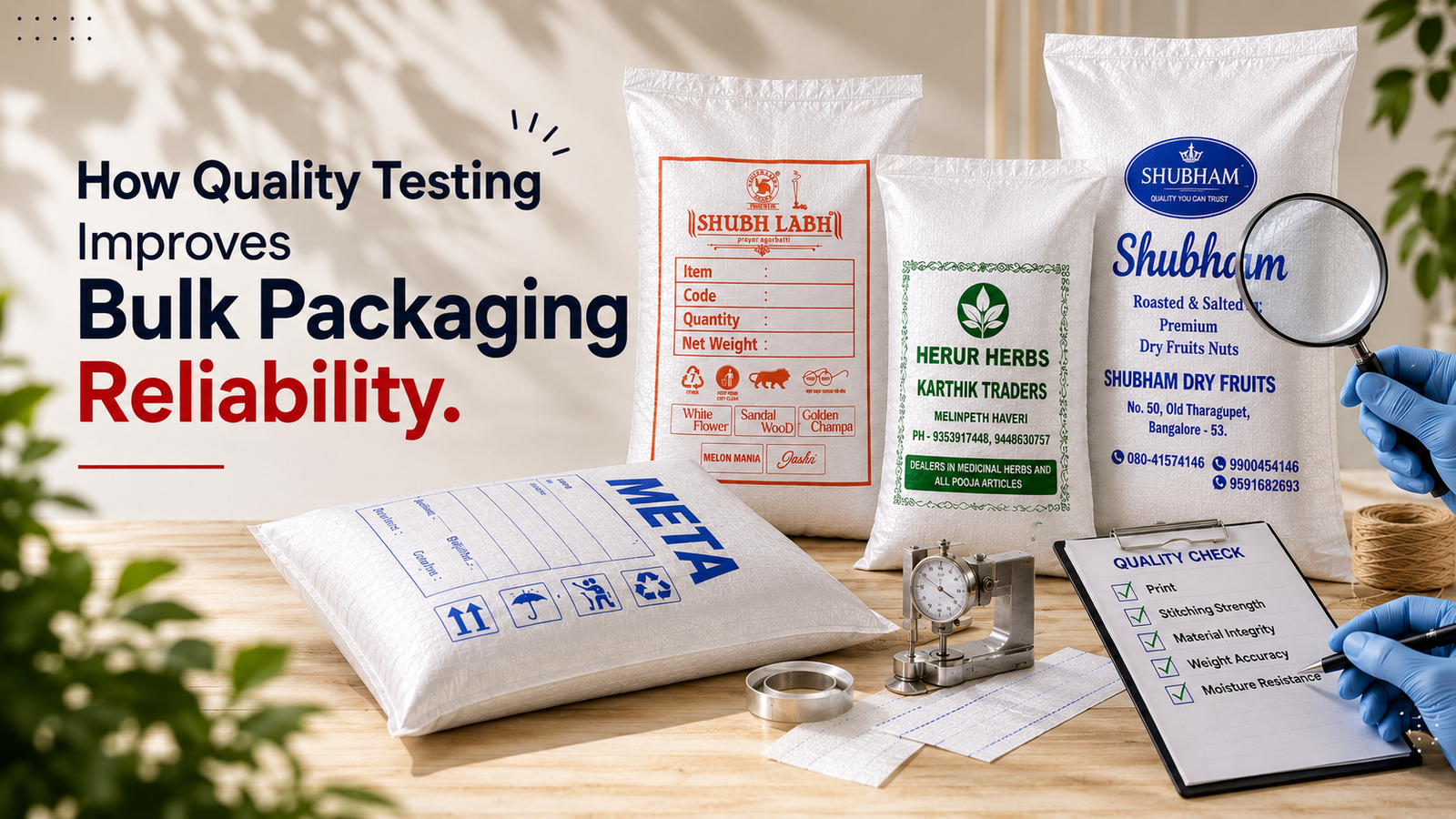
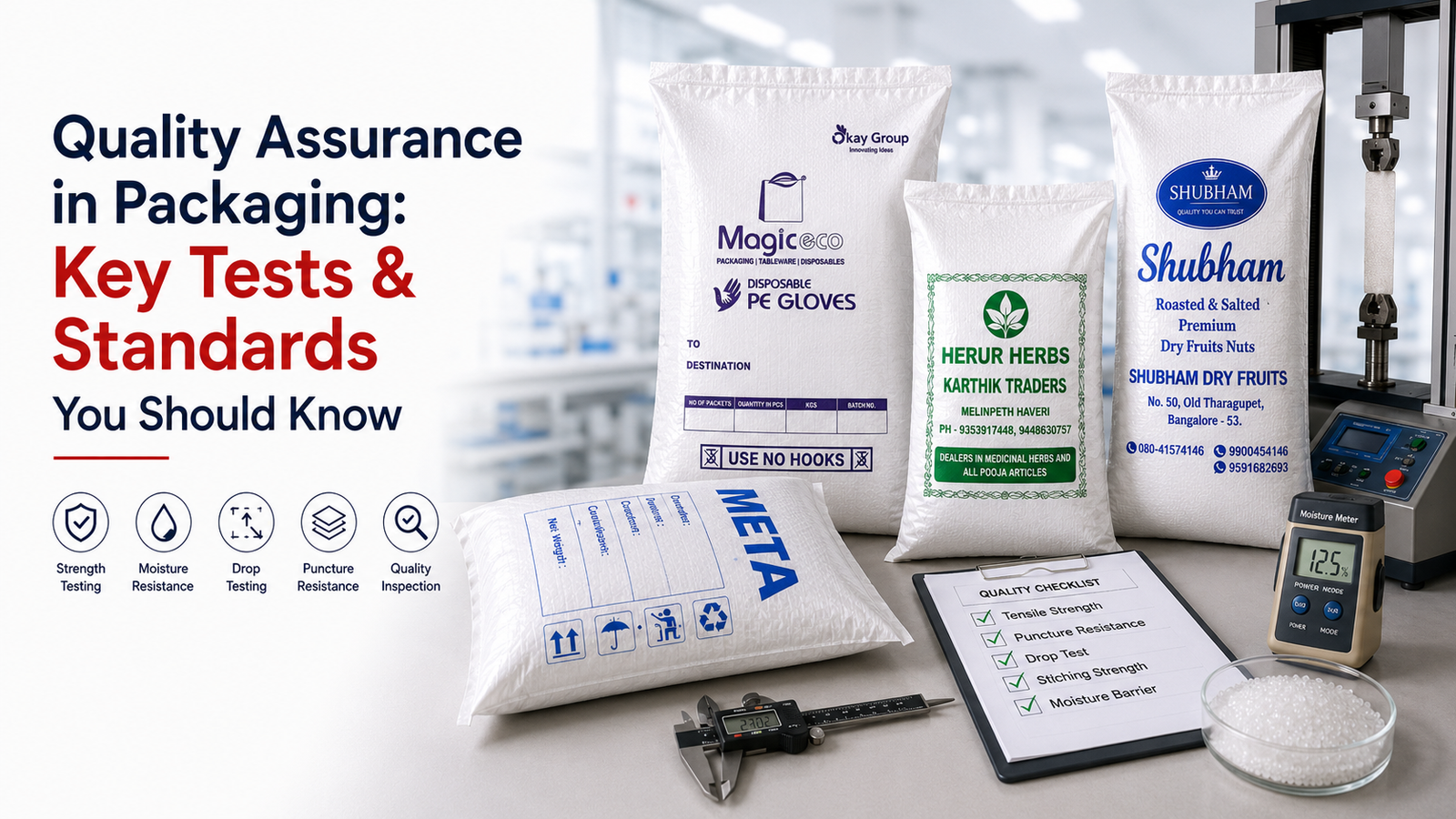
Testing is the foundation of any quality assurance process. Every packaging material is evaluated under controlled conditions to verify its performance. Below are the most important tests conducted in the packaging industry.
1. Tensile Strength Test
This test measures the maximum stress the fabric can withstand before breaking. It is critical for HDPE/PP woven sacks and liners. A strong tensile strength ensures that the packaging will not tear during filling, lifting, or stacking.
2. Bursting Strength Test
This evaluates the resistance of fabric against internal pressure. It is especially important for laminated woven bags used for powders and granular materials, ensuring that the fabric can handle high internal stress during handling.
3. Drop Test
In this test, a filled bag is dropped from a set height (usually 1.2 meters) to simulate real transportation shocks. This confirms the structural integrity of the packaging during rough handling and transit.
4. UV Resistance Test
Outdoor storage exposes packaging to UV radiation. This test checks how well the fabric resists UV degradation over time, which is critical for products like fertilizers, cement, or grains stored in open yards.
5. Top Lift Test (FIBC Bags)
This test ensures the lifting strength of a filled jumbo bag when lifted by its loops. It verifies that the bag can be handled safely with forklifts or cranes without tearing.
6. Tear Resistance Test
This determines how well the fabric resists the propagation of small tears. Strong tear resistance ensures that the packaging can withstand stress during stacking, transport, and unloading.
7. Moisture Barrier & Permeability Test
Moisture protection is crucial for products like powders, food grains, or chemicals. This test measures how effectively the liner or fabric prevents moisture from entering, preserving product quality.
International Standards for Packaging Quality
Packaging quality is governed by well-defined global standards. Compliance with these ensures product safety, customer satisfaction, and easier export approvals.
| Standard | Organization | Scope |
|---|---|---|
| ISO 21898 | International Organization for Standardization (ISO) | FIBC design, manufacturing & testing |
| ASTM D3786 | ASTM International | Bursting strength |
| ISO 9073-3 | ISO | Tensile strength of non-wovens |
| BIS IS 14887 | Bureau of Indian Standards (BIS) | Woven sack specifications |
| EN 1898 | European Committee for Standardization (CEN) | FIBC performance standards |
Niyopack’s Commitment to Quality
At Niyopack, quality control is integrated into every stage of production. From raw material sourcing to final inspection, our processes are aligned with global standards to ensure reliable and consistent packaging solutions.
- Use of high-grade raw materials
- In-house tensile, burst, and drop testing
- Batch-wise inspection before dispatch
- ISO and ASTM compliant testing procedures
- Custom test reports available on request
Pro Tip: Ensure Your Supplier Provides Documentation
When selecting a packaging partner, always ask for test certificates and compliance documents. Verified testing reports ensure the packaging meets required performance and regulatory standards, especially for export shipments.
Final Thoughts
Quality assurance in packaging goes far beyond a checklist — it protects your products, your brand reputation, and your customers. By choosing packaging solutions that meet international quality standards, you minimize risks and build a more reliable supply chain.
Get in touch with Niyopack today to explore packaging solutions designed to meet global testing and performance benchmarks.