In bulk packaging, safety is not optional — it is critical. FIBC (Flexible Intermediate Bulk Containers), also known as jumbo bags, are widely used for transporting chemicals, food grains, minerals, fertilizers, and construction materials.
One key term buyers often hear is “Safety Factor” — usually 5:1 or 6:1. But what does this actually mean?
Understanding safety factor helps ensure load stability, compliance, and accident prevention.
What Is Safety Factor in FIBC?
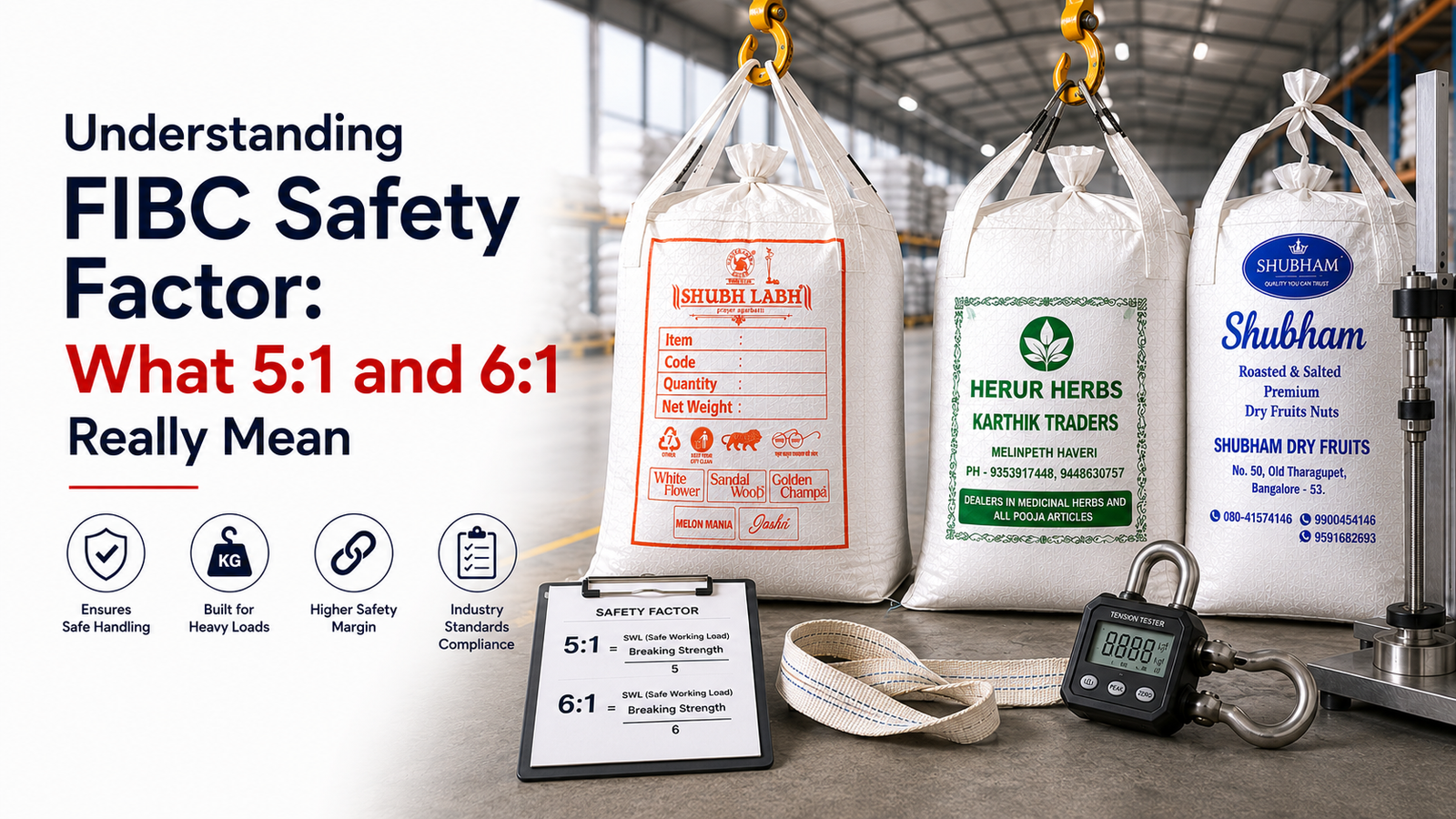
Safety factor refers to the ratio between the bag’s breaking strength and its Safe Working Load (SWL).
For example:
- A 1000 kg SWL bag with 5:1 safety factor must withstand 5000 kg before failure
- A 1000 kg SWL bag with 6:1 safety factor must withstand 6000 kg before failure
This ensures the bag performs safely under normal handling conditions.
When to Use 5:1 Safety Factor
5:1 bags are generally used for:
- Single-trip applications
- One-time industrial shipments
- Export consignments
- Standard warehouse transport
They are designed for controlled, predictable logistics cycles.
When to Use 6:1 Safety Factor
6:1 safety factor bags are suitable for:
- Multi-trip usage
- Reusable industrial environments
- Heavy-duty repetitive lifting
- Higher risk handling operations
These bags undergo more rigorous performance requirements.
Why Safety Factor Matters
Choosing the wrong safety factor can lead to:
- Load rupture
- Workplace accidents
- Compliance failure
- Insurance issues
- Product loss during transit
Proper selection ensures operational safety and regulatory adherence.
Final Thought
FIBC safety factor is not just a number — it’s a risk management decision. Always match safety factor with handling frequency and logistics conditions.