The Foundation of Strength, Safety, and Long-Term Performance
In bulk packaging operations, reliability is not a luxury — it is a necessity. Whether transporting chemicals, food grains, minerals, fertilizers, or construction materials, packaging must consistently withstand mechanical stress, environmental exposure, and repeated handling cycles.
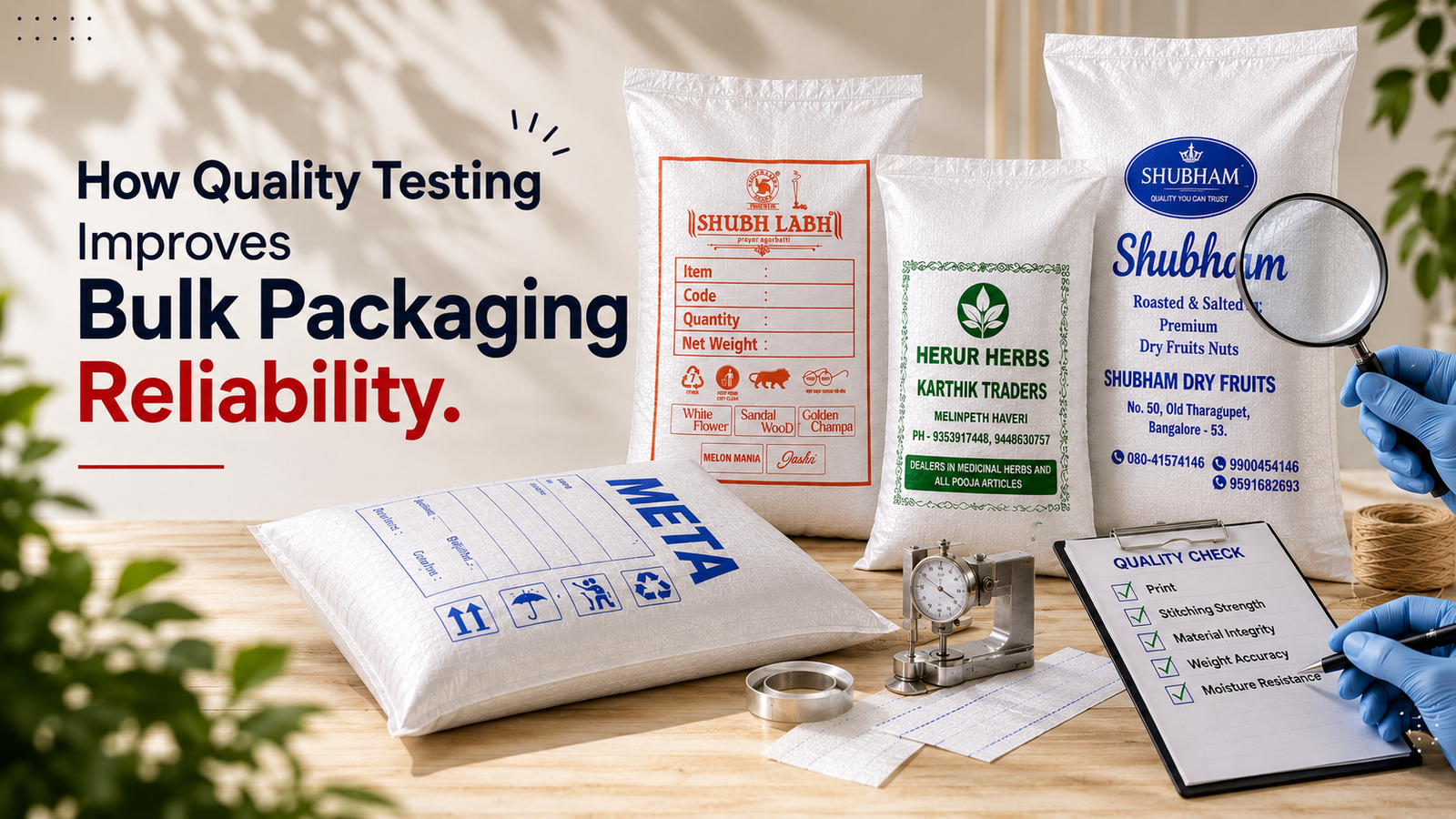
Quality testing is the backbone of reliable packaging performance. Without structured testing protocols, strength claims remain theoretical. Real-world logistics conditions are unpredictable — and only tested packaging can withstand them.
From tensile resistance to UV durability, every test plays a specific role in ensuring that bulk packaging materials perform safely and consistently across supply chains.
Why Quality Testing Is Critical in Bulk Packaging
Bulk packaging — particularly woven polypropylene bags and FIBC (Flexible Intermediate Bulk Containers) — is subjected to:
- Heavy static loads
- Dynamic lifting forces
- Impact during handling
- Stacking compression
- Environmental exposure
- Long-distance transportation stress
A minor weakness in material strength or stitching integrity can lead to:
- Material leakage
- Structural collapse
- Workplace injury
- Product contamination
- Financial loss
- Export rejection
Quality testing eliminates uncertainty by validating performance before the packaging enters the supply chain.
Key Tests in Bulk Packaging
Each test evaluates a different aspect of structural reliability. Together, they create a comprehensive strength profile.
1. Tensile Strength Test
Measuring Fabric Resistance to Stretching and Tearing
The tensile strength test evaluates how much pulling force the woven fabric can withstand before breaking.
Why It Matters
During:
- Filling operations
- Lifting by loops
- Transport vibration
- Stacking pressure
The fabric experiences tension in multiple directions.
If tensile strength is inadequate:
- Panels may stretch excessively
- Seams may open
- Fabric may tear under load
What Is Measured
- Maximum force before rupture
- Elongation percentage
- Breaking load capacity
High tensile strength ensures the packaging maintains shape and integrity even under heavy loads.
2. Bursting Strength Test
Evaluating Resistance to Internal Pressure
The bursting strength test measures how much internal pressure the fabric can withstand before it ruptures.
This is particularly important when packaging:
- Powdered chemicals
- Granular materials
- Fine minerals
- Fertilizers
Why It Matters
Internal pressure builds due to:
- Dense material packing
- Product settlement
- Impact during transport
If bursting strength is insufficient:
- Side panels may split
- Bottom seams may rupture
- Sudden load discharge may occur
A high bursting strength rating ensures packaging can handle internal stress without structural failure.
3. Drop Test
Simulating Real-World Handling Impact
The drop test replicates accidental drops during loading, unloading, or warehouse handling.
The filled packaging is dropped from a specified height under controlled conditions to assess structural response.
What It Evaluates
- Seam durability
- Fabric integrity
- Loop stability
- Bottom discharge strength
Why It Matters
In real-world logistics, drops are unavoidable. The drop test ensures that minor impacts do not result in catastrophic failure.
Failure in drop testing often reveals:
- Weak stitching
- Insufficient fabric reinforcement
- Poor load stabilization
Passing this test significantly reduces transit damage risk.
4. Top Lift Test
Verifying Lifting Loop Performance Under Full Load
The top lift test evaluates the strength of lifting loops and their stitching attachment points.
FIBC bags are frequently lifted using forklifts or cranes. All load weight transfers to the lifting loops during this process.
What Is Assessed
- Loop tensile strength
- Stitching reinforcement
- Load balance stability
- Deformation under stress
Why It Matters
Loop failure during lifting can cause:
- Sudden bag drop
- Severe material loss
- Equipment damage
- Workplace accidents
The top lift test ensures the packaging can safely withstand full working load without structural compromise.
5. UV Resistance Test
Ensuring Durability Under Sunlight Exposure
Bulk packaging is often stored outdoors or exposed to sunlight during transport and port operations.
Prolonged UV exposure can degrade woven polypropylene fabric over time.
What UV Testing Measures
- Material strength retention after exposure
- Fiber degradation rate
- Surface brittleness development
Why It Matters
Without UV resistance:
- Fabric weakens gradually
- Tensile strength decreases
- Seam integrity reduces
- Unexpected rupture risk increases
UV resistance testing ensures packaging maintains structural reliability even in outdoor environments.
Why Testing Matters in Real Supply Chains
Quality testing is not just about passing laboratory standards — it directly impacts operational performance.
Testing helps:
1. Ensure Compliance with International Standards
Export shipments often require adherence to global performance standards. Testing validates compliance and reduces rejection risk.
2. Prevent Transit Failures
Validated packaging significantly reduces:
- Leakage incidents
- Structural collapse
- Damage claims
- Product loss
3. Maintain Product Safety
For chemicals and food materials, packaging integrity protects against:
- Contamination
- Moisture ingress
- Environmental exposure
4. Improve Export Reliability
Consistent testing builds confidence in packaging performance across long-distance shipping and multiple handling cycles.
The Long-Term Operational Benefits of Quality Testing
Organizations that implement structured quality testing experience:
- Lower return rates
- Reduced damage claims
- Improved workplace safety
- Higher operational efficiency
- Stronger brand reliability
Testing transforms packaging from a cost component into a risk management tool.
Quality Testing as a Risk Mitigation Strategy
In bulk logistics, the true cost of packaging failure includes:
- Replacement material cost
- Transport rescheduling
- Insurance claims
- Customer dissatisfaction
- Reputation damage
Investing in quality testing minimizes these risks before they materialize.
Final Insight
Bulk packaging reliability does not happen by assumption — it is engineered and verified through systematic testing.
Tensile strength, bursting resistance, drop impact durability, loop integrity, and UV stability together form the backbone of safe packaging performance.
Consistent quality testing reduces operational risks, enhances long-term durability, and strengthens supply chain confidence.
Reliable packaging is not defined by appearance — it is defined by performance under stress.