A Critical Risk Factor in Industrial Storage and Transportation
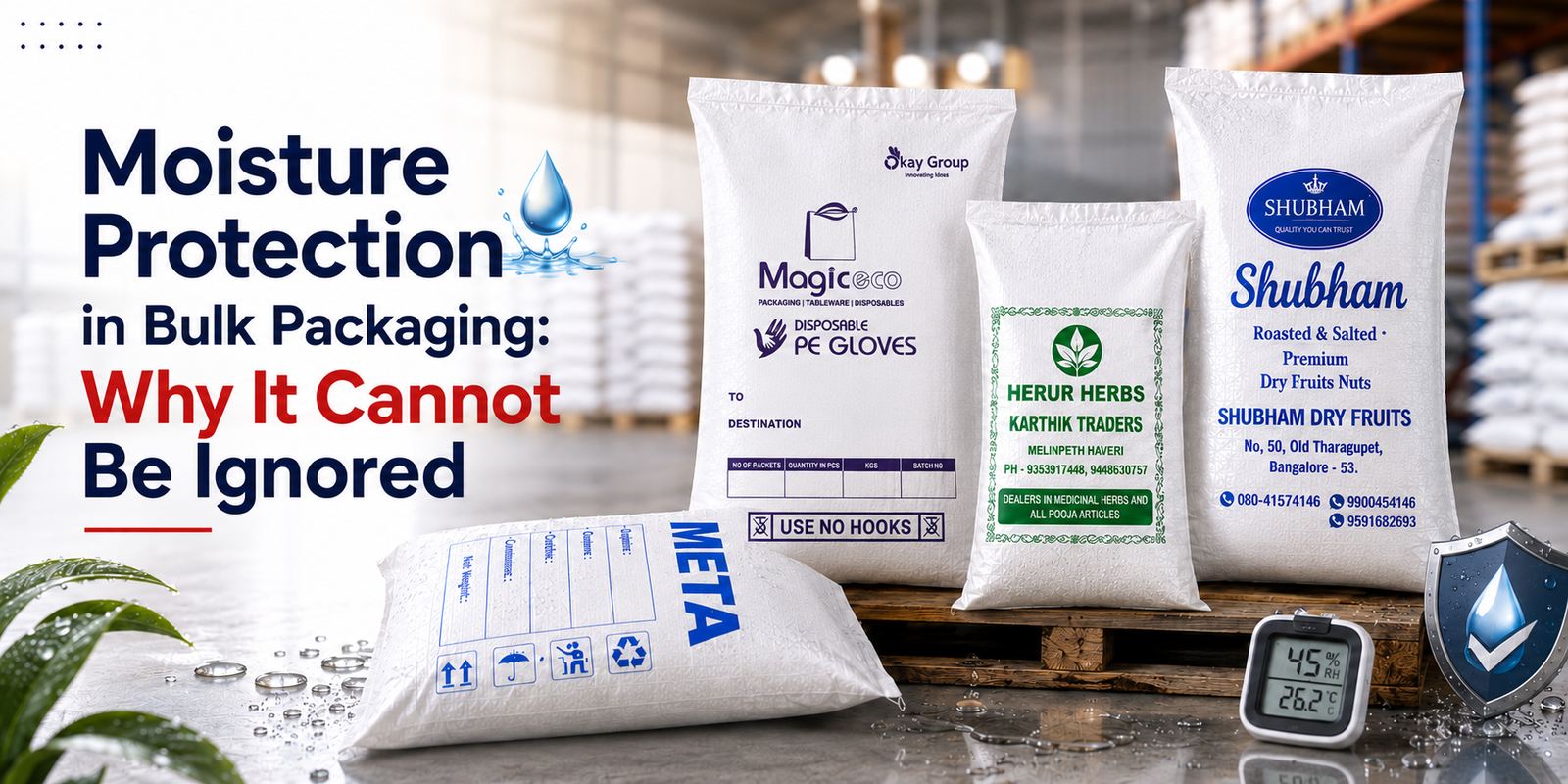
Moisture is one of the most underestimated threats in bulk packaging. While visible damage such as tearing or seam failure is easy to detect, moisture-related degradation often occurs silently — weakening packaging performance over time.
For industries handling:
- Chemicals
- Fertilizers
- Food grains
- Powder materials
- Construction additives
- Minerals
Moisture exposure can lead to structural weakening, contamination, and significant material loss.
In high humidity environments or monsoon-prone regions, moisture protection is not optional — it is a core operational requirement.
Why Moisture Is a Major Risk in Bulk Packaging
Bulk packaging, particularly woven polypropylene bags and FIBC (Flexible Intermediate Bulk Containers), is often stored or transported in:
- Open warehouses
- Port storage yards
- Coastal regions
- Outdoor loading areas
- High-humidity climates
Even if the packaging appears intact externally, moisture can gradually compromise structural integrity.
How Moisture Affects Packaging
1. Weakens Fabric Strength
Woven polypropylene fabric can gradually lose tensile performance when exposed to prolonged humidity.
Effects include:
- Reduced fiber durability
- Gradual weakening of woven structure
- Lower resistance to stress during lifting
- Increased risk of rupture under load
Moisture does not always cause immediate failure — it accelerates long-term degradation.
2. Causes Contamination
Moisture intrusion into packaging can:
- Contaminate chemicals
- Affect fertilizer composition
- Degrade food grains
- Alter powdered material consistency
Contaminated products often result in:
- Rejected consignments
- Customer complaints
- Export compliance issues
3. Promotes Microbial Growth
In food-grade or organic materials, moisture creates ideal conditions for:
- Mold formation
- Fungal growth
- Microbial contamination
This can compromise product safety and make the material unsuitable for further processing.
4. Leads to Product Spoilage
Certain materials are highly moisture-sensitive. Exposure may result in:
- Clumping of powder materials
- Chemical reactions
- Loss of effectiveness
- Weight inconsistencies
- Reduced shelf life
Moisture damage is often irreversible.
Practical Moisture Control Measures
Preventive action must be built into storage and dispatch systems.
1. Use Protective Liners
Inner liners act as a moisture barrier between external humidity and packaged material.
Benefits include:
- Reduced vapor penetration
- Improved product safety
- Protection against condensation
Protective liners are especially important for:
- Fine powders
- Hygroscopic chemicals
- Export shipments
2. Store in Dry Environments
Warehouse management plays a critical role.
Best practices include:
- Proper ventilation
- Controlled humidity levels
- Avoiding roof leakage
- Regular inspection for dampness
A dry storage environment significantly reduces moisture exposure risk.
3. Elevate Packaging from Floor
Ground-level storage increases exposure to:
- Floor condensation
- Water seepage
- Cleaning moisture
Using pallets to elevate packaging:
- Creates airflow underneath
- Prevents direct contact with damp surfaces
- Improves long-term storage safety
Even a small elevation gap can make a major difference.
4. Seal Properly Before Dispatch
Improper sealing allows moisture infiltration during transport.
Ensure:
- Top openings are securely closed
- Stitching is intact
- Liners are sealed correctly
- Discharge spouts are tightly secured
Transport conditions often involve temperature variation, increasing condensation risk.
Risk Management Strategy
In high humidity regions, moisture control must be treated as a standard operating procedure (SOP), not an afterthought.
A proactive moisture management strategy should include:
- Pre-dispatch inspection
- Environmental monitoring
- Proper palletization
- Warehouse audits
- Staff training
Moisture risk increases during:
- Monsoon season
- Coastal storage
- Port waiting times
- Long transit durations
Organizations that integrate moisture control into routine operations experience:
- Reduced spoilage
- Lower damage claims
- Better export reliability
- Improved customer trust
Final Insight
Moisture damage is subtle but costly. It weakens packaging, compromises product quality, and increases operational risk.
Moisture protection in bulk packaging is not simply about material strength — it is about long-term reliability, compliance, and safety.
Proactive control ensures packaging performs as intended throughout the supply chain.